

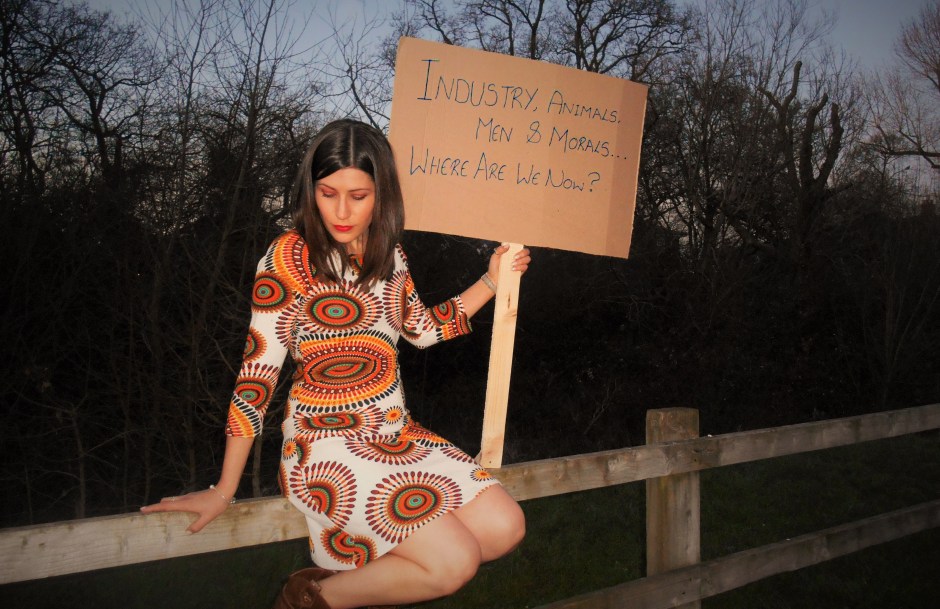
This is something I struggle with, because we didn’t get into this situation out of the blue. It feels a bit like the chicken and the egg. Was it the consumer’s greed that pushed businesses into supplying more and more, cheaper and cheaper at any cost? Or was it the selfish multi nationals who deceived and misled innocent consumers into mass buying products, concealing the ugly truth behind a pretty label and a catchy ad?
One huge contributing factor to the demand was the sheer growth of the population. Following the industrial revolution we had plenty of everything we needed. As the population grew so did demand and, without much consideration of the consequences, businesses produced plenty. At this point I don’t think you can really blame them; at least not for the environmental issues as they couldn’t have known better at this time. Personally I feel less forgiving of the factory farming side of the revolution.
I’ve split the problem into 3 topics for research as the subject is so huge: human rights, animal rights and environmental issues. I wanted to understand when people really started to realise the true cost of their comfortable lifestyles and at what point did lack of information and awareness stop being a genuine excuse?
Apparently the answer is the 60’s! As there were loads of influential people around at this time, there’s so much I want to read and research but if I did my life would go on hold and I’d never finish this blog, or go to work! I have however done a bit of research and these two ladies are defiantly worth a mention:
Bridgid Brophy was a playwright, novelist, critic and essayist. She was an advocate for human and animal rights and in 1968 the Sunday Times published her article ‘The Rights of Animals’. This had a huge impact, raising much-needed awareness.
From an environmental view a lady named Rachel Carson ruffled some feathers in 1962 when she released her book ‘Silent Spring’ challenging the chemical industry. She was a biologist, ecologist and writer. Silent Spring sparked the public to question the environmental impact of the industrial age.
Good job ladies!
From what I can gather, before this era no one really questioned business ethics. At least if they did it didn’t get much publicity. So great, the 60’s happened 50 years ago and then what? Because since then we’ve only learned more; the excuse has well and truly gone so shouldn’t we be living much more responsibly now?
I guess for consumers living responsibly means spending more; we’re used to a way of life that provides everything we could need in abundance and so much waste. Replacing our food, clothes, cosmetics and everything else with sustainably sourced products, responsibly packaged and responsibly produced costs much more. I think this is what’s stopping businesses too, if they produce responsible products, their costs go up, their price goes up and unless their competitors do the same they lose business because generally, although most people say it’s important for businesses to produce products responsibly, they aren’t willing to pay the price. Or they can’t afford it.
So what’s next? I know it’s not all bad so I’m going to find out what has changed since the 60’s, and what hasn’t. I found some useful websites while writing this so if you’re interested have a look at these. This is a learning journey for me so please critique and advise me; it’s useful! I need sources too. I have access to academic databases but without knowing what to search they haven’t been very useful so far.
One last thing; I can’t find Bridged Brophy’s article ‘The Rights of Animals’ anywhere, if you know how to access this please let me know, comment or find me on twitter.
Thanks for reading and have a fab day!
Lucy Carolyn xx
Useful Sites:
http://www.history.com/topics/industrial-revolution
http://www.think-differently-about-sheep.com/
 letsliveresponsibly.com